

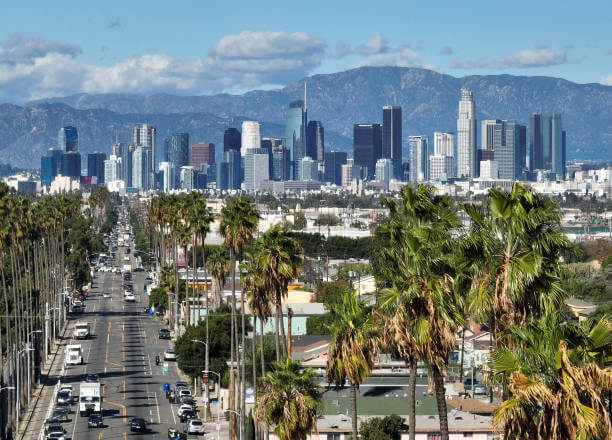
North Hollywood’s climate at a glance
North Hollywood sits in the eastern San Fernando Valley, part of the City of Los Angeles. Like the rest of the region, it has a warm Mediterranean-style climate: long, hot and dry summers and mild winters with most of the year’s rain falling between November and March. Because the Valley is cut off from the ocean by the Santa Monica Mountains, North Hollywood is usually hotter in summer and slightly cooler on winter nights than coastal neighbourhoods such as Santa Monica.
For the current conditions and a reliable forecast, check the National Weather Service or a trusted weather app, as the figures below describe typical patterns rather than today’s weather.
Seasons in North Hollywood
Summer (June to September)
Summer days are typically sunny and hot, with afternoon highs often in the low to mid-90s °F (around 32–35 °C). Heatwaves can push temperatures above 100 °F (38 °C). Rain is very rare, and evenings cool down noticeably.
Autumn (October to November)
Autumn stays warm, and this is the season when hot, dry Santa Ana winds are most likely. These winds can raise temperatures suddenly and sharply increase wildfire risk across Southern California.
Winter (December to February)
Winters are mild, with daytime highs usually in the mid-60s to around 70 °F (18–21 °C) and nights that can drop into the low 40s °F (around 5 °C). Most of the year’s rainfall arrives during this period, often in a handful of storms.
Spring (March to May)
Spring brings warming temperatures and gradually drier weather. Late spring can bring overcast mornings, known locally as “May Gray”, before the sun burns through.
The downsides
The main drawbacks of North Hollywood’s climate are summer heat and fire risk. Very hot days can be uncomfortable without air conditioning, and dry vegetation in surrounding hills means wildfire smoke can affect air quality during fire season. Strong winds can also make outdoor activities unpleasant on some days.
Does it ever snow?
Snow in North Hollywood itself is extremely rare. Los Angeles has recorded light snowfall at low elevations only a few times in its history, and it usually melts immediately. The nearby San Gabriel Mountains, however, receive snow most winters, and on clear days after a storm you can often see snow-capped peaks from the Valley.
Best time to visit
For comfortable weather, spring and autumn are generally the best times to visit North Hollywood. Temperatures are pleasant, skies are mostly clear, and it is easy to enjoy the NoHo Arts District, local theatres, parks and nearby hiking trails without the peak summer heat.

