

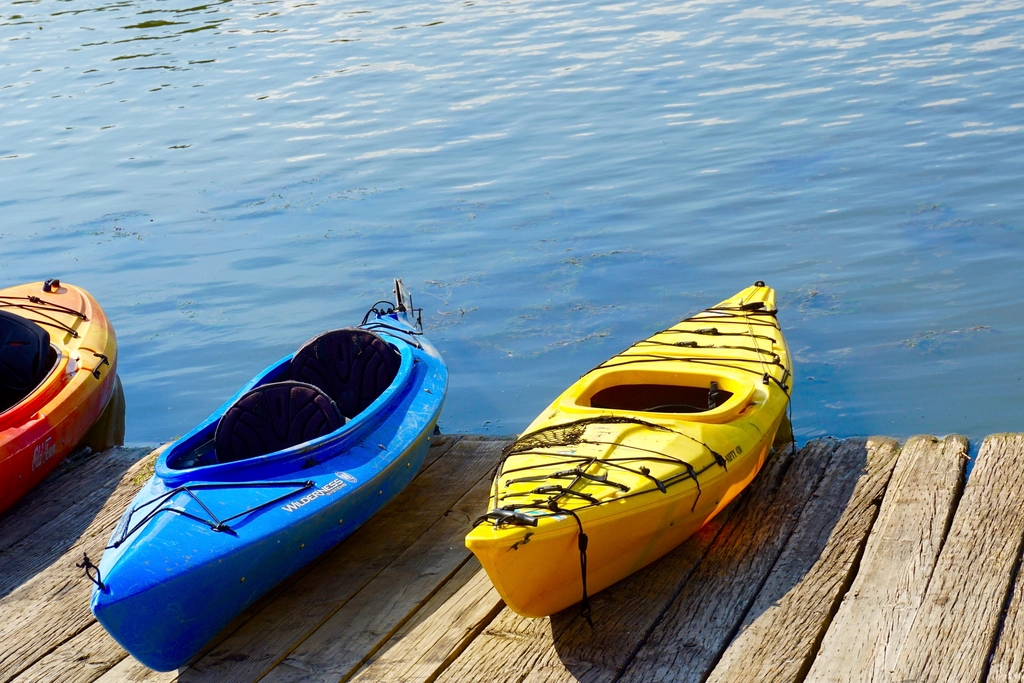
Camping and kayaking are two of the best ways to enjoy summer outdoors. Camping lets you sleep under the stars and unplug, while kayaking lets you explore lakes, rivers, and coastlines from the water. To do both safely, choose a safe campsite, pack the right gear, always wear a life jacket on the water, and start small if you’re new.
Below are tips for a safe and enjoyable camping trip, plus tips for a better day on the water, and answers to common beginner questions.
What Is Camping?
Camping is an outdoor activity that involves spending nights away from home in a shelter, such as a tent. Campers often combine it with hiking, fishing, and swimming.
Why Do People Go Camping?
Some people camp to escape the rush of daily life and enjoy the quiet of nature. Others go to bond with family and friends outdoors. And for some, it’s simply a cheaper option than a hotel or resort.
Tips for a Safe and Enjoyable Camping Trip
- Choose a safe campsite. Avoid spots at risk of flooding or close to wildlife activity. If you’re unsure, ask a ranger.
- Bring enough food and water. Pack extra for emergencies, and store food properly so it doesn’t attract animals.
- Pack the right gear. Bring a tent, sleeping bags, a first-aid kit, and insect protection.
- Prepare for bad weather. Check the forecast and pack rain gear and warm layers.
- Know your limits. If you’re new to camping, start with a short trip close to home.
What Is Kayaking?
Kayaking means paddling a small boat through water with a double-bladed paddle. People kayak for fun, exercise, and exploring places you can’t reach on foot.
Why Do People Go Kayaking?
For some, kayaking is great exercise. For others, it’s a way to explore new places and see the world from the water. And for many, it’s just a fun way to spend a day outdoors.
Tips for an Enjoyable Kayaking Experience
- Choose the right kayak. Sit-on-top kayaks are stable and easy for beginners. Sit-inside kayaks keep you drier in cooler water.
- Wear a life jacket. Bring a properly fitted life jacket and a whistle for each person, and wear it the whole time.
- Pick a comfortable paddle. The right length and weight make a big difference.
- Start on calm water. Lakes and slow rivers are best for beginners.
- Check the weather and wind. Strong wind can make paddling back much harder.
- Take your time. There’s no rush. Enjoy the scenery.
Gear Checklist for a Camping and Kayaking Trip
| For camping | For kayaking |
|---|---|
| Tent and stakes | Kayak and paddle |
| Sleeping bag and pad | Life jacket for each person |
| Stove, fuel, cooler | Whistle and dry bag |
| Lantern and headlamp | Sunscreen, hat, water bottle |
| First-aid kit | Quick-dry clothes |
Want more ideas? See our tips for making camping more enjoyable, and if you’re taking an e-bike to the campsite, read our summer e-bike battery tips.
Frequently Asked Questions
Is kayaking safe for beginners?
Yes, when you take simple precautions. Wear a properly fitted life jacket, start on calm water like a lake or slow river, and check the weather and wind first. Paddle with a friend, stay close to shore at first, and consider a beginner lesson or guided tour to learn the basics.
What should I wear kayaking?
Wear quick-drying clothes, not cotton, plus a life jacket at all times. Add a hat, sunglasses, and sunscreen for sun protection. Water shoes or sandals with straps are better than flip-flops. In cool water, dress for the water temperature, not the air, and bring a dry change of clothes.
Can you go kayaking and camping on the same trip?
Absolutely. Many campgrounds sit near lakes or rivers, and some offer kayak rentals. You can paddle during the day and camp at night. Experienced paddlers even do kayak camping, carrying gear in dry bags on the boat. Beginners should start with a campsite near easy water.
What is the best time of year for camping and kayaking?
Late spring through early fall is usually best in most places, when the weather and water are warmer. Summer is popular, so book campsites early. Spring and fall bring fewer crowds but cooler temperatures, so pack warmer layers and check that rentals and campgrounds are open.
Do I need my own kayak?
No. Many lakes, parks, and outdoor shops rent kayaks by the hour or day, often with paddles and life jackets included. Renting lets you try different styles before you buy. If you go often, owning your own kayak can save money over time.
Get Out and Explore
Camping and kayaking pair perfectly for a summer adventure. Choose a safe site, pack smart, wear your life jacket, and start with easy water.
Pick a nearby campground with a lake this month, book a kayak rental, and plan a simple overnight trip to try both.

